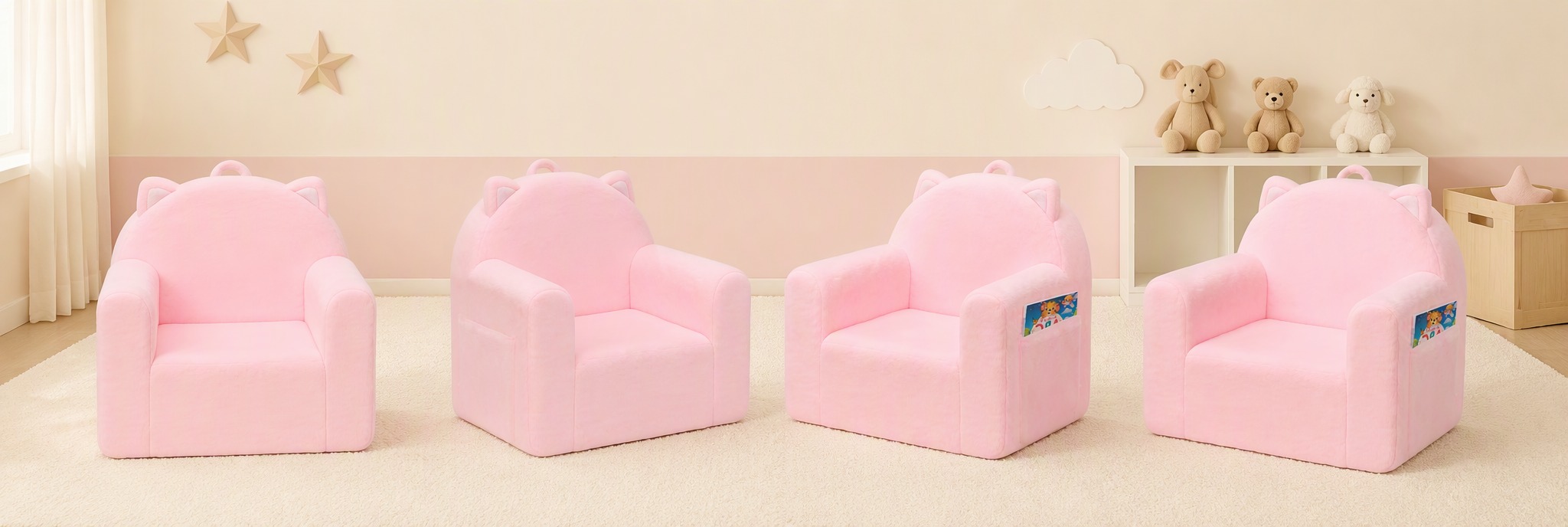
7 Ways to Build a Better Kids Sofa Collection

A kids sofa may be the first product a brand develops in the children’s soft furniture category. Foam, fabric and a compact soft-seating structure do not appear particularly difficult to manufacture.

But a mini sofa should not be treated as an isolated product. It can become the starting point for a wider children’s seating collection that supports reading, resting, parent-child interaction and everyday play.

A one-piece kids sofa, a floor chair, a folding sofa and a two-seat sofa may look like separate products. With the right planning, they can become different parts of one product system.

For brands developing or evaluating kids sofa collections, seven decisions deserve attention before the first product is finalized.

1. Start With the Use Scenario, Not the Shape

Many children’s sofa projects begin with a visual reference. The shape may be a cloud, an animal, a flower or a simple modern mini sofa.

But the first question should be how the product will be used.

A reading sofa, a quiet-time seat, a parent-child sofa and a soft-play product may need different proportions and structures. Children may sit, kneel, lie down, lean on the armrests or climb onto the seat. The design needs to consider these behaviors before the final appearance is approved.

Possible use scenarios include:

  • reading and quiet time;
  • watching and relaxing in the living room;
  • parent-child interaction;
  • pretend play and soft-play activities;
  • temporary rest or lying down;
  • small-apartment use;
  • portable or travel-related use.

The use scenario affects seat height, seat depth, backrest, armrests, weight, cover construction and packaging. It also affects the product images and the way the brand explains the product to customers.

2. Give Every Sofa a Clear Role

A collection becomes easier to develop when every product has a clear job.

The mini sofa can work as an entry product. A floor chair may provide a lower seating option. A folding sofa can introduce sitting and lying functions. A two-seat sofa can create a shared parent-child or sibling scenario.

Matching products such as an ottoman, cushion or play mat may extend the use of the main sofa. However, every additional SKU should have a reason to exist.

Before adding another product, ask:

  • Does it serve a different use scenario?
  • Does it fit a different space or customer group?
  • Does it create a useful price or product tier?
  • Can it be used together with the existing sofa?
  • Can the factory reproduce it with the same quality standard?

Adding more products is not the same as building a stronger collection. The value comes from making the products easier to understand, combine and extend.

kids sofa collection with mini sofa, floor chair and matching soft furniture

3. Keep the Collection Visually Connected

A collection does not need every product to look identical. It does need the products to look as if they belong to the same brand.

Consistency can come from a shared color family, fabric direction, edge treatment, base detail, logo position, proportion or visual tone.

This becomes important when a brand adds a themed mini sofa or a new seasonal design. A new visual concept should add something to the collection without becoming a completely disconnected SKU.

Before sampling, buyers should decide which elements must remain consistent:

  • approved fabric families;
  • core colors and seasonal color options;
  • visual proportions and edge details;
  • label and branding positions;
  • cleaning and maintenance expectations;
  • packaging presentation.

The goal is not to limit creativity. It is to make creativity easier to scale across several products.

4. Design for Children, Not for Smaller Adults

A kids sofa is not simply an adult sofa made smaller.

Children have different body proportions and use furniture in different ways. A seat that is too high may leave the child’s feet unsupported. A seat that is too deep may reduce back support. A backrest that is too low or too upright can change how the product is used.

Seat height, seat depth, backrest angle, armrest height and overall stability should be considered together with the intended age group and use scenario.

Foam selection also requires more than one number. Density, firmness, thickness, shape and layering all influence the finished result. The seat, backrest and armrests may require different configurations to balance support, comfort, recovery and cost.

Specific dimensions, age recommendations and performance claims should be confirmed through the final product specification and testing plan. They should not be copied from a general category assumption.

5. Develop the Cover for Daily Use

The cover is one of the first parts of a kids sofa that customers touch, see and try to maintain.

Corduroy, teddy, velvet, brushed fabric and other materials differ in stretch, abrasion, pilling, shedding, cleaning performance and sewing behavior. A fabric that looks attractive in a sample book may create a different result when fitted over foam and sewn around corners.

For some projects, a removable cover may make maintenance easier. A water-resistant inner cover may also be considered to help protect the foam. These choices depend on the product position, target price, expected use and confirmed construction.

For private-label projects, buyers should confirm:

  • Can the outer cover be removed?
  • How should the cover be cleaned?
  • Is the inner foam washable?
  • Can the cover be put back on without changing the fit?
  • How will a fabric change affect appearance and production?

A good-looking cover is only the beginning. The real test is whether the product remains practical after repeated daily use.

6. Plan Packaging Before the Product Is Finished

Packaging should not be added after the sofa design has already been approved.

Kids sofas often contain shaped foam, fitted covers, armrests and backrests. Compression can reduce package volume, but it may also affect recovery, cover tension, pressure marks and the final customer experience.

The foam should be sufficiently matured, bonded parts should be fully cured and the finished product should pass inspection before compression. Where compression packaging is used, the package should be observed for issues such as leakage, swelling, pressure marks and incomplete recovery.

Before approving the package, ask:

  • Can the package protect the finished structure?
  • Will the cover fit correctly after recovery?
  • Can the customer understand how to open and restore the product?
  • Can the same packaging method be repeated in future production?

Packaging is part of the product experience. It also affects storage, freight, retail presentation and after-sales communication.

7. Choose a Manufacturer That Can Build the Next SKU

The first mini sofa may be the immediate project, but the manufacturer’s development approach should support the next product as well.

A factory can manufacture what is shown in a drawing. A development partner should also be able to identify where the drawing may create problems.

That might mean questioning a seat proportion that is not appropriate for the intended age group, recommending different foam configurations for the seat and backrest, explaining why a fabric may create poor edge definition, or adjusting the design so future products can remain part of the same collection.

Tenderplay’s kids sofa OEM and ODM development can cover mini sofas, one-piece sofas, folding sofas, floor chairs, themed designs and related children’s soft furniture, with product modification and custom development available depending on the project.

For buyers, a capable partner should be able to:

  • translate a product idea into a workable soft structure;
  • compare foam and fabric options for different product roles;
  • develop physical samples and record approved specifications;
  • control cutting, sewing, assembly and in-process inspection;
  • review compression, recovery and packaging risks;
  • keep future products consistent without making every SKU identical.

If you want a broader supplier-evaluation framework, our kids sofa manufacturer sourcing guide covers the questions brands should consider before selecting an OEM partner.

Before Your Next Kids Sofa Collection

A mini sofa can be a single product, but it can also become the starting point for a complete children’s seating collection.

The strongest product plans connect the child’s use scenario, the family’s space, the brand’s design language, the material system and the practical requirements of production.

For brands, better product development usually comes from deciding the role of each product before deciding how many products to launch.

Tenderplay develops OEM and ODM kids sofa collections for children’s brands, retailers and importers, including mini sofas, one-piece sofas, folding designs, themed products and related soft furniture.

If you are developing a new kids sofa collection, đź”— discuss your mini sofa project with our team before locking the first sample.